Managing VIP access at events is one of the highest-stakes responsibilities in event operations. A single breach — an unauthorised person accessing a VVIP area, a genuine VIP denied at the gate — can create a security incident, a PR disaster, or both.
This guide covers the technology, zone structures, and operational best practices that make VIP access management reliable at any event scale.
VIP Access Management — By the Numbers
0.5s
Scan Speed
99.8%
Access Accuracy
100%
Offline Capable
20+
Events Delivered
What Is VIP Access Management?
VIP access management is the process of controlling which guests, staff, or officials can enter specific restricted areas of an event venue. Unlike general admission — where any valid ticket grants entry to the main event — VIP zones require a separate layer of credential verification, zone permission logic, and real-time monitoring.
At a large Saudi Arabia event, there may be 5–8 distinct VIP tiers: general VIP lounge, premium sponsor hospitality, VVIP suite for royalty or senior officials, backstage green room for performers, press room for accredited media, and operations centre for event staff. Each zone requires different credentials, different staff, and different rules.
Key distinction
VIP access management is not just about who gets in — it is about controlling when, where, and for how long. A performer's green room access should activate 90 minutes before their set and expire 30 minutes after. A sponsor's hospitality box should only be accessible during their contracted time slot. Digital accreditation enforces all of this automatically.
6 Common VIP Access Challenges
These are the most frequent VIP access failures we see at events — and why digital accreditation platforms have become essential for professional event operations.
Paper Guest Lists Fail at Scale
Manual paper-based VIP lists are error-prone, can't be updated in real time, and create bottlenecks when hundreds of guests arrive simultaneously. Staff confusion leads to security breaches or embarrassing denials for legitimate VIPs.
Credential Sharing
VIP wristbands and lanyards are frequently passed between people. Without digital validation and single-use or biometric binding, a single VIP credential can be used by multiple unauthorised individuals.
Internet Dependency
Many VIP access systems require constant cloud connectivity. When venue Wi-Fi fails — and it does — the entire access control system can collapse, leaving VIP guests stranded at entry points.
Multi-Zone Complexity
Major events have layered VIP zones: general VIP lounge, hospitality suite, green room, press room, backstage. Managing who can access which zone with paper or basic wristband systems is practically impossible.
Time-Window Access
VIP credentials often need to be valid only during specific time windows — speakers before their session, sponsors during their allocated hospitality period. Static credentials have no concept of time-based rules.
No Real-Time Visibility
Event organisers and security teams cannot see who is currently in each VIP zone without digital access control. This makes headcount management, emergency response, and security monitoring reactive rather than proactive.
VIP Credential Technology Options
The right credential type depends on your event type, VIP count, security requirements, and budget. Here are the three main options used in Saudi Arabia and the GCC.
RFID Wristband
BestMulti-day events, outdoor venues, high-volume VIP entry
RFID Card
RecommendedConferences, corporate events, government summits
QR Code Badge
GoodSmall to medium VIP groups, single-day events
Zone Configuration for VIP Access
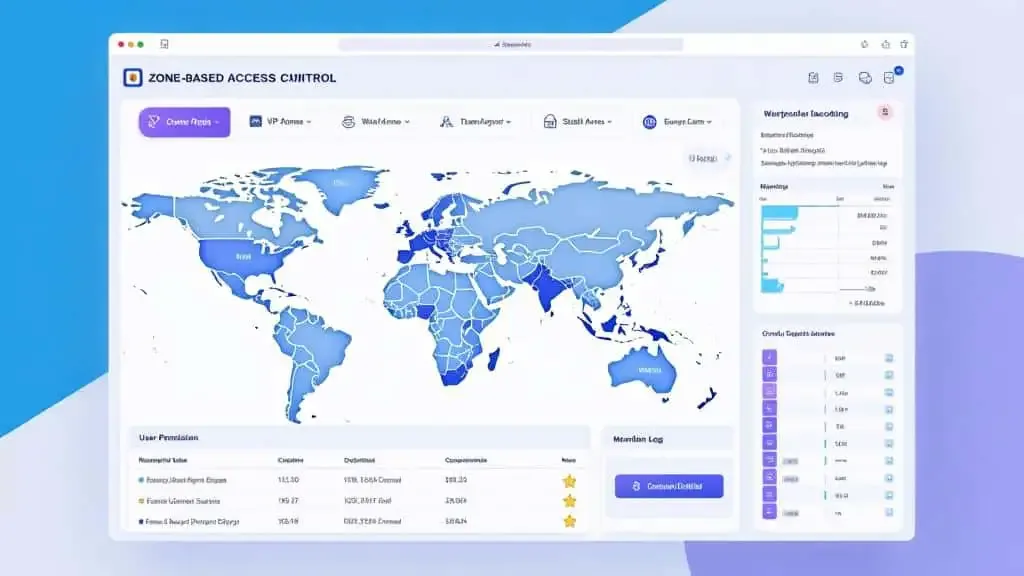
Successful VIP zone management requires clear zone definitions before the event. Every zone needs a name, credential requirement, time window, and assigned staff. StampIQ's zone-based access control service handles this configuration — letting organisers define unlimited zones and permission levels without manual scanning infrastructure. Here are the standard VIP zone types used at Saudi Arabia's major events.
VIP Lounge
General VIP access for sponsors, premium ticket holders, and invited guests. Typically the largest VIP zone at any event.
Access: VIP, Gold sponsor, Premium ticket
VVIP / Royal Suite
Restricted to the highest-tier guests: royalty, government officials, keynote speakers, and event principals. Requires separate credential tier.
Access: VVIP only, security-accompanied
Hospitality Area
Sponsor hospitality boxes and hosted areas. Access typically tied to specific company or sponsor group credentials.
Access: Sponsor staff, invited clients
Backstage / Green Room
Artists, speakers, performers, and their approved entourage. Time-limited access that opens before performance and closes after.
Access: Performer, crew, production
Press / Media Room
Accredited media with valid press credentials. Separate from VIP access — a journalist may be press but not VIP, or both.
Access: Accredited media, photographers
Operations / Control
Event operations centre, security command, and technical production. Strictly restricted to verified staff with operational roles.
Access: Staff only, role-verified
RFID vs QR Code for VIP Access
For VIP guests specifically, the choice between RFID and QR credential technology has significant implications for security, experience, and operational complexity.
| Feature | RFID | QR Code |
|---|---|---|
| Scan speed | Under 0.5s | 0.5–1.5s |
| Shareable / copyable | No (encrypted) | Possible (screenshot) |
| Waterproof | Yes | Depends on print quality |
| Time-based access | Yes | Yes |
| Multi-zone support | Yes | Yes |
| Unit cost | Higher | Lower |
| Remote issuance | No (physical) | Yes (email/SMS) |
| Best VIP use case | On-site events | Remote attendees |
For VVIP guests in Saudi Arabia, RFID is almost always recommended due to the security implications of credential sharing and the importance of a seamless, professional entry experience.
VIP Access at Saudi Arabia Events
StampIQ has delivered VIP accreditation at some of Saudi Arabia's highest-profile events, where the security and protocol requirements are among the most demanding in the world.
AlFursan Endurance AlUla
Multi-zone RFID deployment covering VIP paddock, VVIP royal enclosure, media zone, and general accreditation across a remote desert venue.
AlUla Desert Polo 2026
Separate credential tiers for royal family members, international polo teams, VIP sponsors, media, and general spectators — with full offline capability.
Bedouin Tent Tour
Compact multi-site accreditation with per-stop zone permissions — credentialing the same attendees differently across multiple event locations.
6 Best Practices for VIP Access Management
These practices separate professional VIP operations from amateur setups — and have been validated across real events in Saudi Arabia.
Tier your VIP zones with distinct credential colours
Use visually distinct credential colours per zone tier so security staff can identify access level at a glance — even without scanning.
Enable real-time duplicate scan alerts
Configure instant notifications to security team when the same credential is scanned twice at different gates within a short time window.
Configure time-based access windows
For performers and speakers, activate credentials 90 minutes before their session and automatically expire them 30 minutes after. Remove human error from time-based access.
Assign a dedicated VIP zone manager per zone
Each restricted zone should have one person with dashboard access who can approve overrides, handle last-minute additions, and escalate issues instantly.
Always test offline mode before VIP arrivals
VIPs are less forgiving of system failures than general attendees. Confirm all scanners operate in offline mode before the event opens — and that sync restores correctly.
Report VIP zone occupancy to event directors in real time
Give senior stakeholders a live dashboard view showing headcount and recent entries for VVIP areas. This supports safety decisions and official protocol.
Frequently Asked Questions
Answers to the most common VIP access management questions from event organisers.
Professional VIP Accreditation for Your Next Event
StampIQ delivers RFID-based VIP access management for Saudi Arabia's most demanding events — from royal enclosures to multi-tier sponsor zones. Manage credential tiers, staff assignments, and per-zone permissions through StampIQ's role-based management service — built specifically for multi-tier event operations.
Request a Demo