The registration question that every Saudi event organiser eventually asks is the wrong one: "Should we use online or on-site registration?" The right question is: "How do we build a system that handles both, because we will need both."
In markets with stable pre-registration behaviour — where attendees confirm early and reliably — online-only registration is viable. Saudi Arabia is not that market. Government attendee confirmations arrive 24–72 hours before events. Corporate guest lists change up to the morning of the event. Walk-in attendance at public events can reach 30% of total headcount.
This guide examines both models honestly — their advantages, limitations, and the specific hybrid approach that professional Saudi event organisers use to handle both without operational chaos.
Saudi Arabia Event Registration — Platform Data
68%
Prefer Online Pre-Reg
25%
Walk-In Rate (avg)
30s
On-Site Check-In
100%
Data Accuracy
Understanding Both Models
Online registration means attendees complete a digital form before the event — typically via a web portal or app — and receive a confirmation that they present on arrival. On-site registration means attendees provide their details at the venue on event day, with credentials issued immediately.
Both models have been in use for decades, but the technology underlying each has transformed significantly. Modern online registration platforms support conditional logic, multi-language forms, automated approval workflows, and direct integration with badge printing. Modern on-site systems use QR scanners and on-demand printers to reduce walk-in processing to under 90 seconds per person.
The Saudi Arabia context:
Late confirmation culture and high walk-in rates make Saudi Arabia unique among professional event markets globally. Any registration system that doesn't account for 20–30% late or on-site additions will create day-of operational problems regardless of how well the online component performs.
Online Registration Benefits
Online registration remains the foundation of professional event management. Its advantages are significant and well-established — the issue is never whether to use online registration, but how to supplement it for the attendees who don't or can't pre-register.
Advantages
- Data captured before event day — no day-of data entry errors
- Automated confirmation emails reduce no-contact enquiries
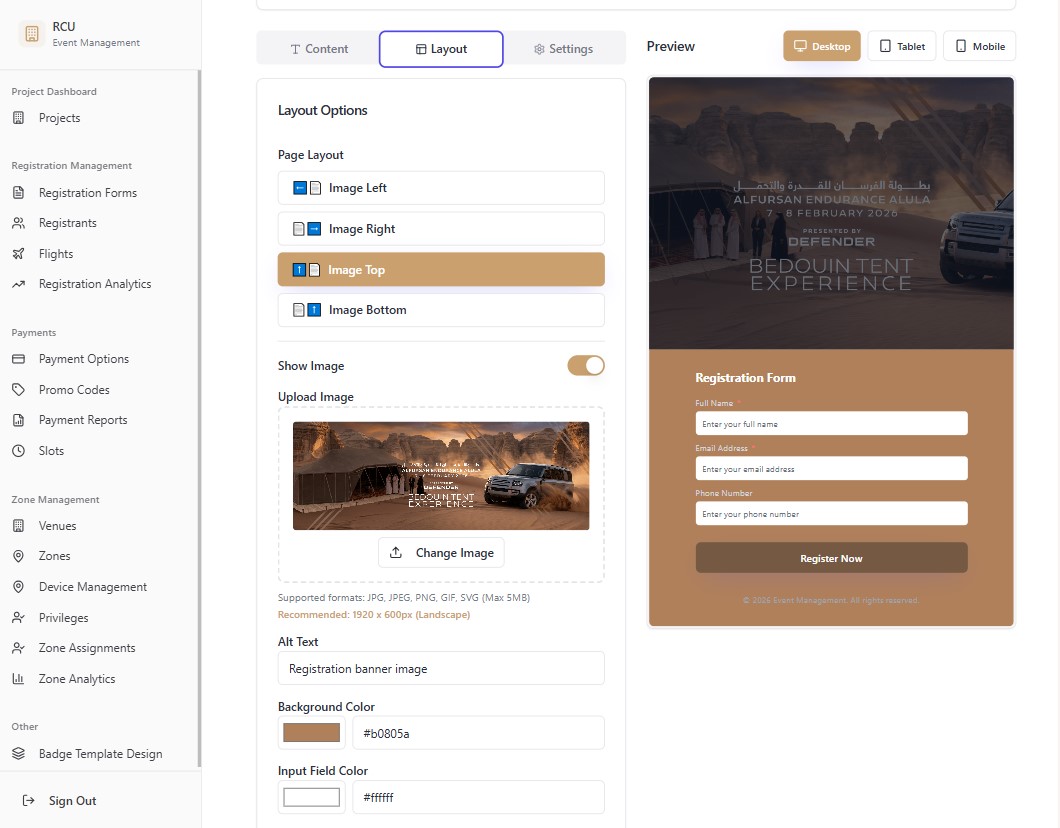
- Customisable forms with conditional logic for complex events
- Full Arabic and English bilingual support
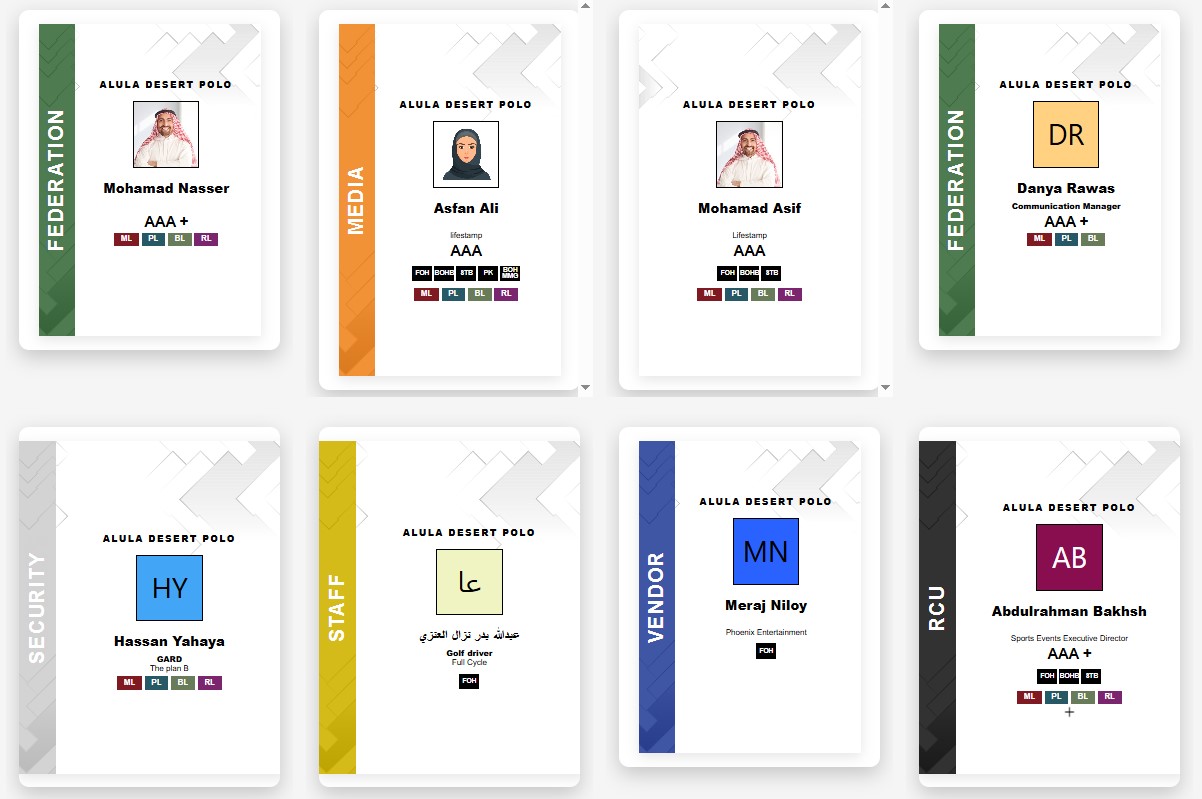
- Integration with badge design for instant print-readiness
- Analytics on registration trends and category breakdowns
- Waitlist management for oversubscribed events
- Secure payment processing for ticketed events
Limitations
- Requires attendees to have internet access and email
- Late confirmations (common in Saudi corporate events) create last-minute updates
- Government attendees may require in-person identity verification regardless
- Attendees who miss the deadline cannot self-register
On-Site Registration Benefits
On-site registration is not a fallback — it is a necessary component of any event that expects walk-ins, late confirmations, or attendees with incomplete pre-registration data. Modern on-site systems are fast enough that they no longer create the queues associated with paper-based check-in.
Advantages
- Handles walk-ins and last-minute attendees in real time
- No deadline pressure — register up to the moment of entry
- Identity verification can be performed face-to-face
- Immediate credential issuance — badge printed within 60 seconds
- Suitable for events where pre-registration is not practical
Limitations
- Data quality depends on manual entry under time pressure
- Queues form during peak arrival periods if stations are understaffed
- Cannot pre-populate badges or run accreditation approval workflows
- No pre-event attendee analytics or demographic breakdowns
The Hybrid Approach
The hybrid approach is not a compromise — it is the professional standard for Saudi events. It uses online registration for the majority of attendees and a fast on-site system for walk-ins, with both feeding into a single unified attendee database and badge printing workflow.
Open Online Registration 6–8 Weeks Before Event
Launch the StampIQ registration portal with all required fields, session selection, and confirmation emails. Set a nominal 'standard registration' deadline 1 week before the event to drive early sign-ups.
Enable Late Registration Category
After the standard deadline, switch to a 'late registration' category (same form, different badge colour or category label). This captures the 15–25% of Saudi corporate and government attendees who confirm late.
Pre-Load Attendee Database Before Event Day
Sync the complete registered attendee database to all on-site print stations. Badges for pre-registered attendees are print-ready on arrival — no data entry required at the registration desk.
Deploy Walk-In Registration Desk Alongside Main Registration
A separate walk-in desk handles new attendees arriving without pre-registration. Staff use a simplified form (name, organisation, category) that takes under 90 seconds — then prints a badge immediately.
Technology Requirements
A hybrid registration system requires three integrated technology components. The integration between them is as important as each component individually — disconnected systems create the exact data gaps that hybrid registration is designed to eliminate.
Online Registration Portal
Bilingual form with custom fields, automated confirmations, approval workflows, and QR-coded tickets.
On-Site Check-In System
QR scanner for pre-registered attendees (under 10 seconds) plus walk-in form with instant badge printing.
Unified Attendee Database
Single data store that combines online and on-site registrations for real-time analytics and complete audit trail.
Which Model to Choose
For most professional events in Saudi Arabia, the answer is hybrid. But the balance between online and on-site processing varies by event type. Here is a practical guide:
International Conference
Hybrid (90% online, 10% on-site)
High pre-registration compliance but always some late walk-ins and press.
Corporate Event
Hybrid (70% online, 30% on-site)
Late confirmations from senior executives and government guests are normal.
Public Festival
Hybrid (50% online, 50% on-site)
Walk-in attendance is a core audience segment, not an exception.
Government Summit
Online-primary (95% online)
Pre-approved attendee list; on-site processing is credential issuance only.
Sports Event
Hybrid (60% online, 40% on-site)
Large public attendance plus VIP/media requiring separate workflows.
Frequently Asked Questions
Build the Perfect Registration System for Your Event
StampIQ's platform handles both online pre-registration and on-site walk-ins in a single unified system — with full Arabic support, automated approval workflows, and on-demand badge printing.
View Registration Platform